Who is moving first.
The first people moving are not always the people you should play for all night. They are useful information, but the room is bigger than the loudest table.
Wedding DJ Crowd Reading
Reading a wedding crowd is not just watching who is dancing. It is noticing who is waiting, who is leaving, what the couple wants, what the family needs, and which song will make the next choice feel safe for the room.
This is one of the biggest skills that turns a DJ from someone who plays songs into someone a couple can trust with the night.
See the dance floor mistakes DJs should avoidLearn the wedding DJ skills beyond mixingGet The Full Playbook - $4.99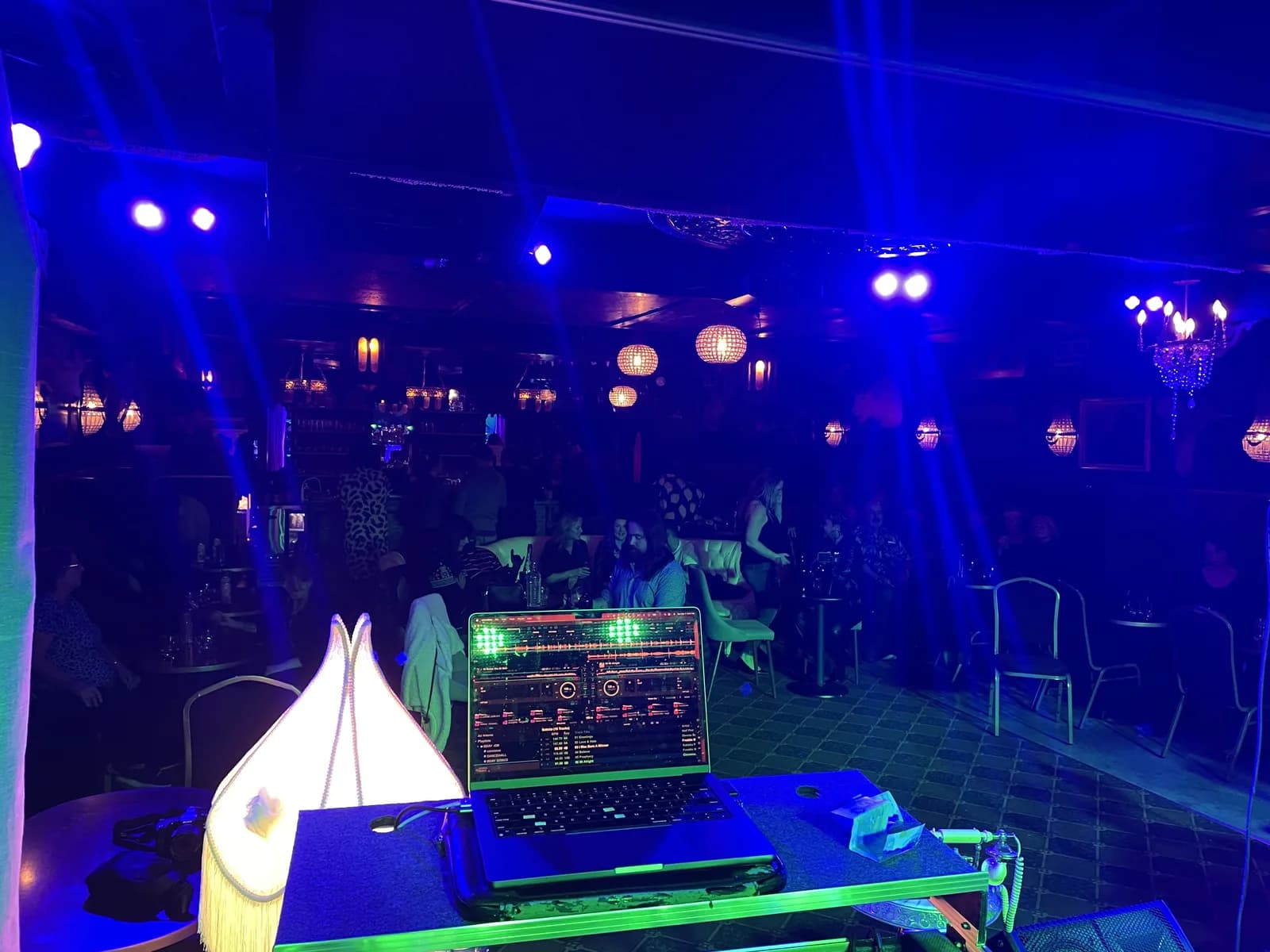
The Reframe
A club crowd usually tells you quickly whether a song is working. A wedding crowd is more complicated. Some guests want old favorites. Some want current songs. Some are waiting for the couple. Some are shy until a song gives them permission.
That is why wedding crowd reading starts before open dancing. Ceremony sound, announcements, dinner pacing, and the way you handle the timeline all affect whether guests trust you later.
When people say a DJ "read the room perfectly," they usually mean the DJ made each change feel natural. The music matched the moment before guests had to think about it.
Signals
The first people moving are not always the people you should play for all night. They are useful information, but the room is bigger than the loudest table.
A wedding crowd often has guests waiting for permission. If people are tapping feet, singing, filming, or standing near the floor, you may be one familiar song away from a fuller room.
Watch the bar, patio, photo booth, exits, and bathroom path. A floor can look fine for 30 seconds while the room is quietly drifting away.
Weddings are mixed-generation rooms. If you only serve the couple's friends, you can lose parents and family. If you only serve older guests, the late-night crowd never arrives.
A request tells you what one person wants. Your job is deciding whether it fits the couple, the moment, the room, and the next three songs.
Guests dance more when the DJ feels calm and the next song feels obvious. Dead air, uncertain transitions, and panic song choices make people hesitate.
What To Do
You do not need a magic song list. You need a way to make the next decision while the room is changing. The better you get at noticing signals, the less you panic when the floor shifts.
A new DJ should practice this before their first wedding. Do not only practice transitions. Practice opening runs, age-group shifts, request judgment, singalong resets, and recovery songs.
Requests
Requests can save a dance floor. They can also break momentum. The difference is whether you treat them as information or instructions.
Ask yourself: does this fit the couple? Does it fit this age group? Is the room ready for it now, later, or not at all? Will it open the floor wider or shrink the night around one table?
That judgment is part of what makes wedding DJing valuable. The client is not just paying you to say yes to every song. They are trusting you to protect the room.
Proof
That review language matters because it names the skill a new wedding DJ has to learn: reading more than the current song.
A full floor is usually the visible result of invisible decisions: timing, requests, age groups, transitions, and trust built earlier in the night.
FAQ
A wedding DJ reads the crowd by watching who is dancing, who is waiting, where guests are drifting, which age groups are being served, how requests fit the room, and whether the energy needs to build, reset, or simplify.
A wedding DJ should watch the bar, patio, exits, photo booth, family tables, older guests, the couple, and the people near the dance floor who look interested but not confident yet.
No. Requests are useful clues, but they are not automatic instructions. A good DJ decides whether the request fits the couple, the crowd, the timing, and the next direction of the set.
A DJ can recover by simplifying the song choice, shifting age groups, using a familiar anthem or singalong, lowering intensity before rebuilding, or bringing the room back around the couple.
A wedding crowd has mixed ages, family dynamics, formal moments, requests, timelines, and emotional pressure. The DJ is not only serving dancers; they are leading a room through a once-in-a-lifetime event.
From Bedroom To Booked
The playbook shows how a skilled beginner DJ can start turning taste, practice, and room feel into a clearer private-event and wedding DJ path.
Results are not guaranteed. Your market, experience, effort, and preparation matter.